I wasn’t into tempura. Asanuma in Tokyo changed that.
I’ve always thought tempura leans on its ingredients, and that most of them would taste better cooked some other way. Asanuma, an eight-seat counter in Nihonbashi, changed my mind from the first piece. The course is ¥16,000, I’d go back, and the best bite was a bell pepper.
monster gourmetFrom my 2026/10 video
- My share
- ¥26,870
- about US$170, course + my extras, 2026/10 video
- Highlight
- Bell pepper
- Skip
- The extras
- Video
- 14:54
- 2026/10
A day trip for a place I almost turned down
Tempura Asanuma is an eight-seat tempura counter in Nihonbashi, Tokyo. Chef Asanuma Tsutomu came to Tokyo from Yamagata, trained at Tenichi in Ginza, and opened his own place in September 2022.
A Japanese friend invited me. He gets into hard-to-book places a lot and asks me along, and if it’s somewhere I don’t care about, I usually say no. My sneaky motive for saying yes this time: now and then he invites me somewhere I really want to go. Turn him down too often and he might stop asking.
I’d been in Tokyo the week before, with another trip two weeks later, and this wasn’t a place I was dying to try. Gimpo to Haneda is a short flight, though, so I made it a day trip. Doa ga shimarimasu, the doors are closing. Probably the Japanese I’ve heard most in my life.
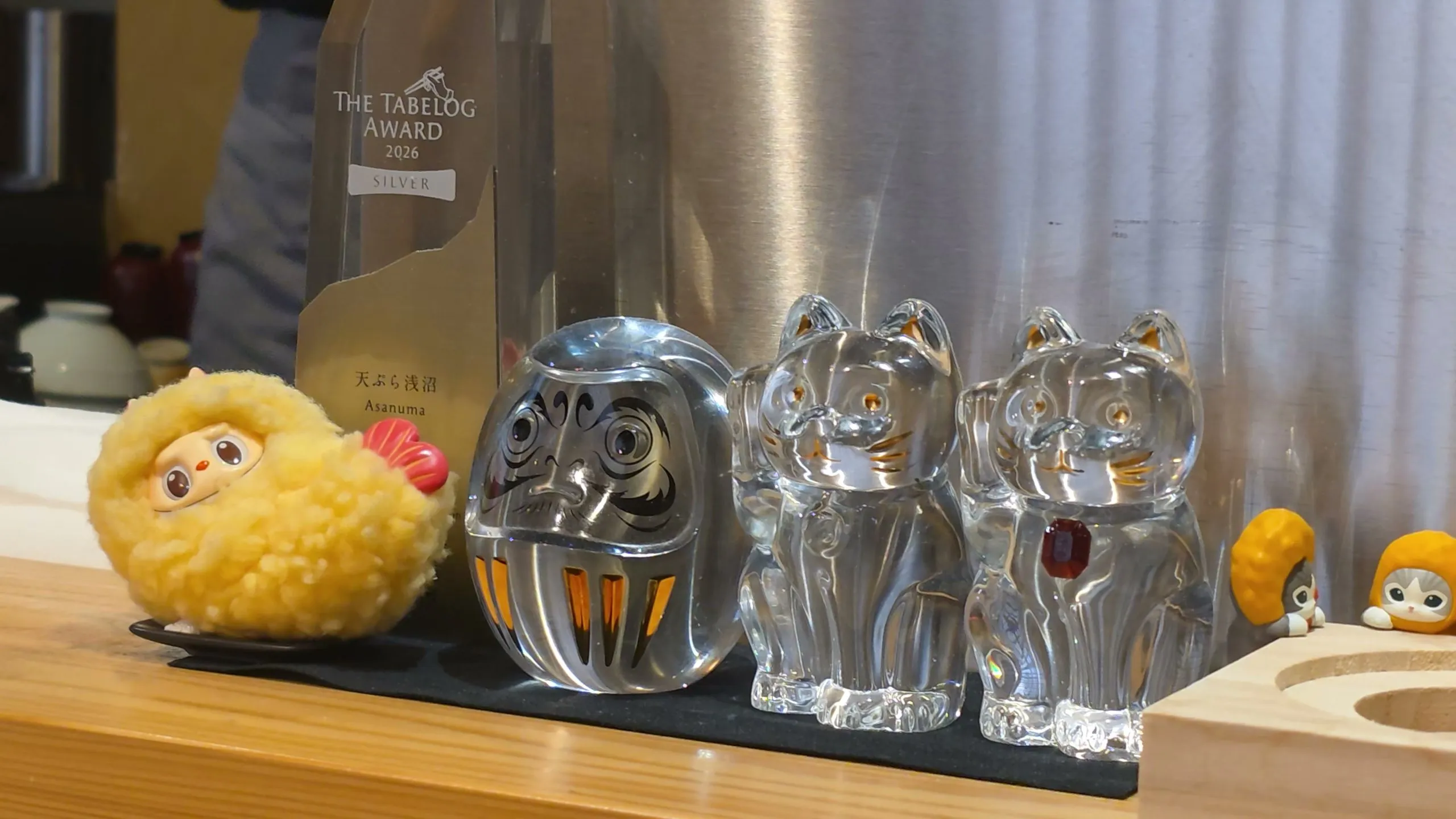
Turns out we’d booked the whole counter. A shrimp-tempura Labubu sits on it next to a Tabelog Award 2026 Silver trophy, and the wall art is an ink painting of a prawn. Kuruma-ebi is the tempura classic, so fair enough.
Why I never liked tempura
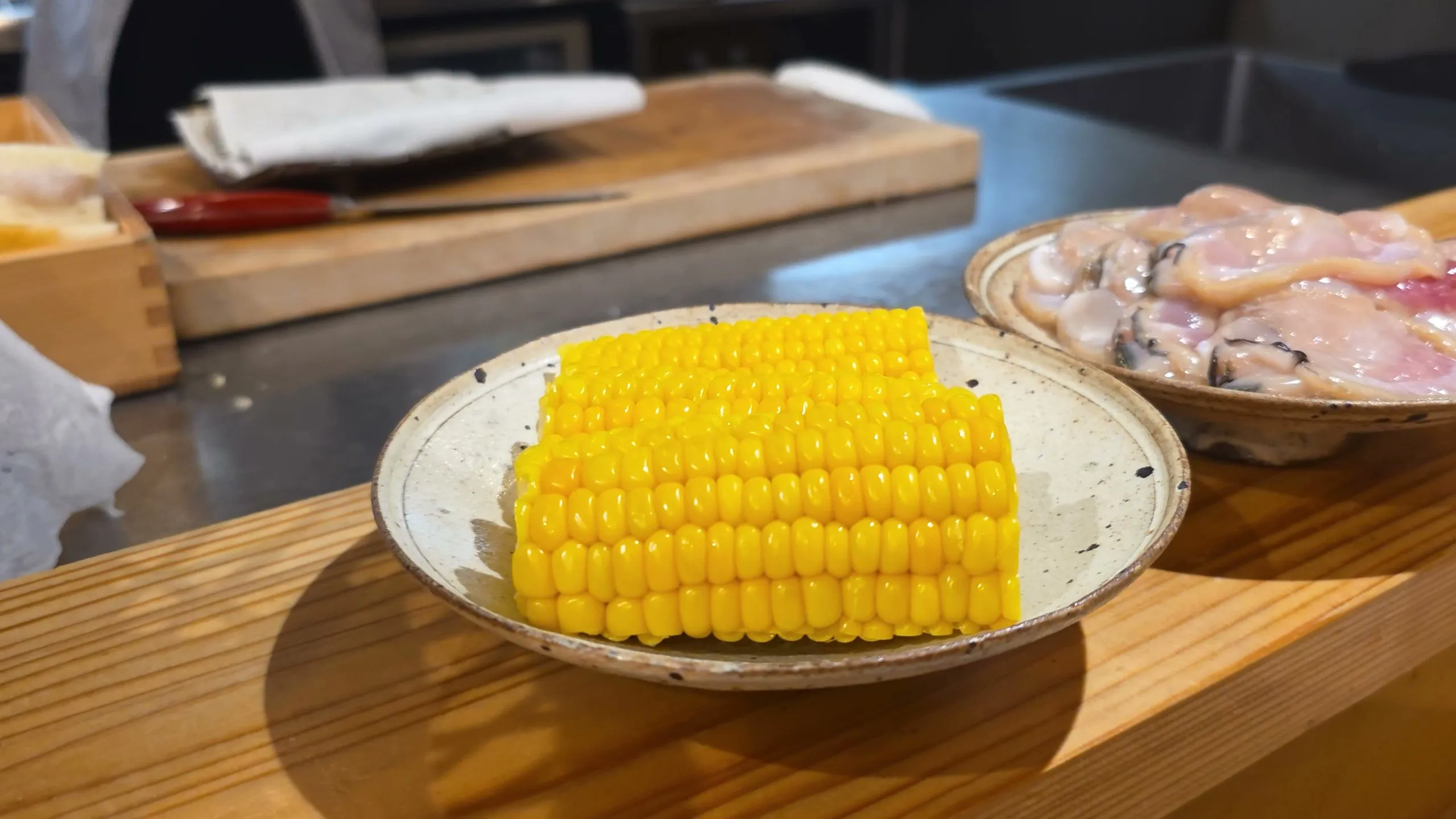
Then the ingredient flex. Corn, clams, eggplant, peppers, and a basket of vegetables that for some reason reminded me of a cotton field.
Here’s my problem with tempura. I think it’s the food that leans hardest on its ingredients. Sure, it keeps their flavor. But cooking is supposed to make an ingredient taste better, and at every tempura place I end up thinking this would be better cooked some other way.
Asanuma was different.
Shrimp toast first, and a word about Takiya
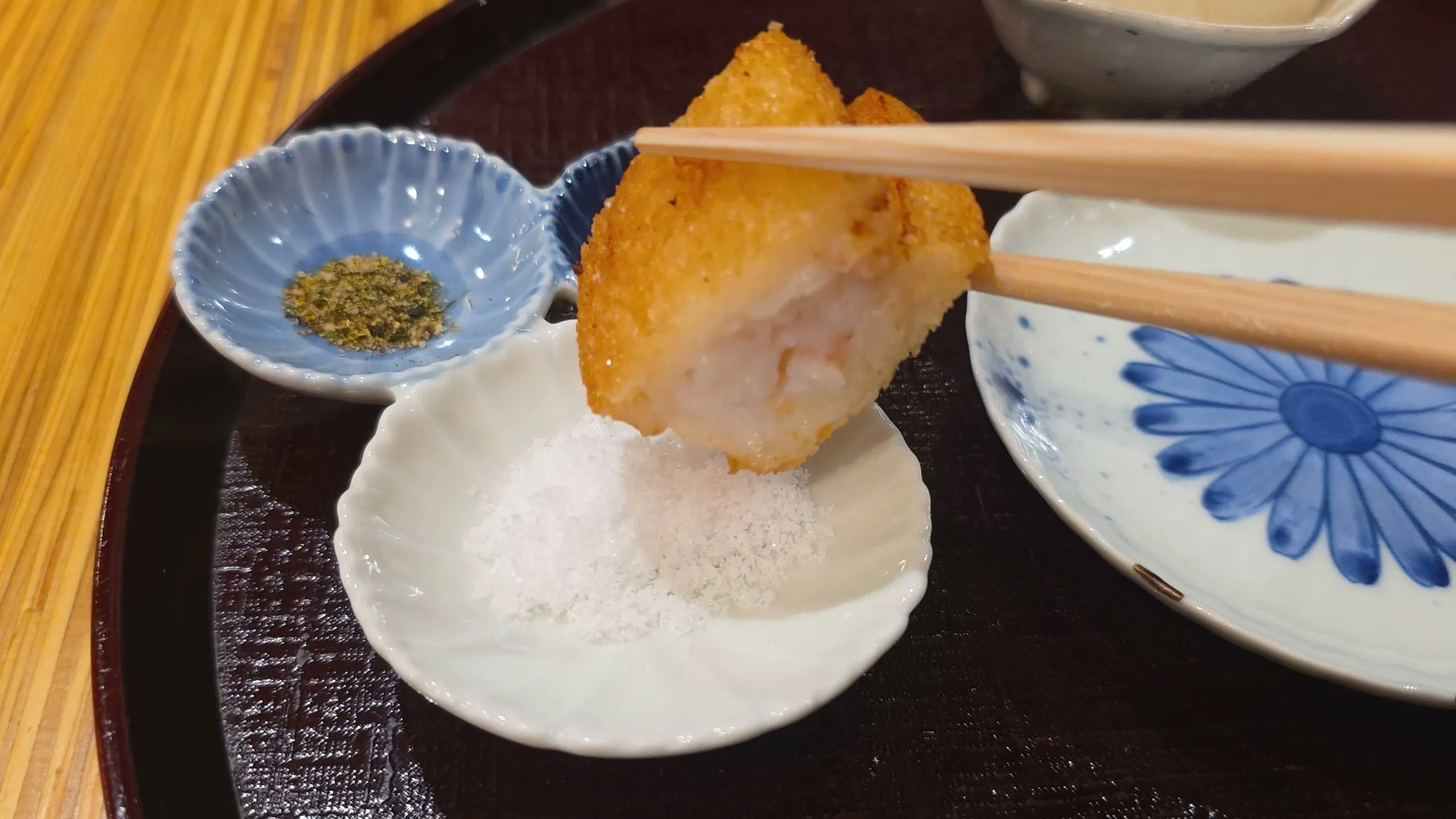
The first piece is usually a prawn. Here it was shrimp toast, which Koreans know as menbosha. Was it replacing the prawns? That’s what I thought.
The restaurant’s site calls it hatoshi, a Nagasaki specialty that came over from China in the Meiji era. Tempura also spread to Edo by way of Nagasaki, so as an opener it fits.
The other guests kept bringing up Takiya. I went about ten years ago, before it moved, and I think it was Tokyo’s number one even then. It still wasn’t my thing. The food wasn’t bad. I just couldn’t shake the thought that this would taste better in another dish.
At Asanuma it tastes good because it’s tempura. When I told chef Asanuma that, he looked really happy.
Two prawns and the batter trick
The shrimp toast wasn’t replacing anything. With a shrimp Labubu and a shrimp painting, of course there were prawns.
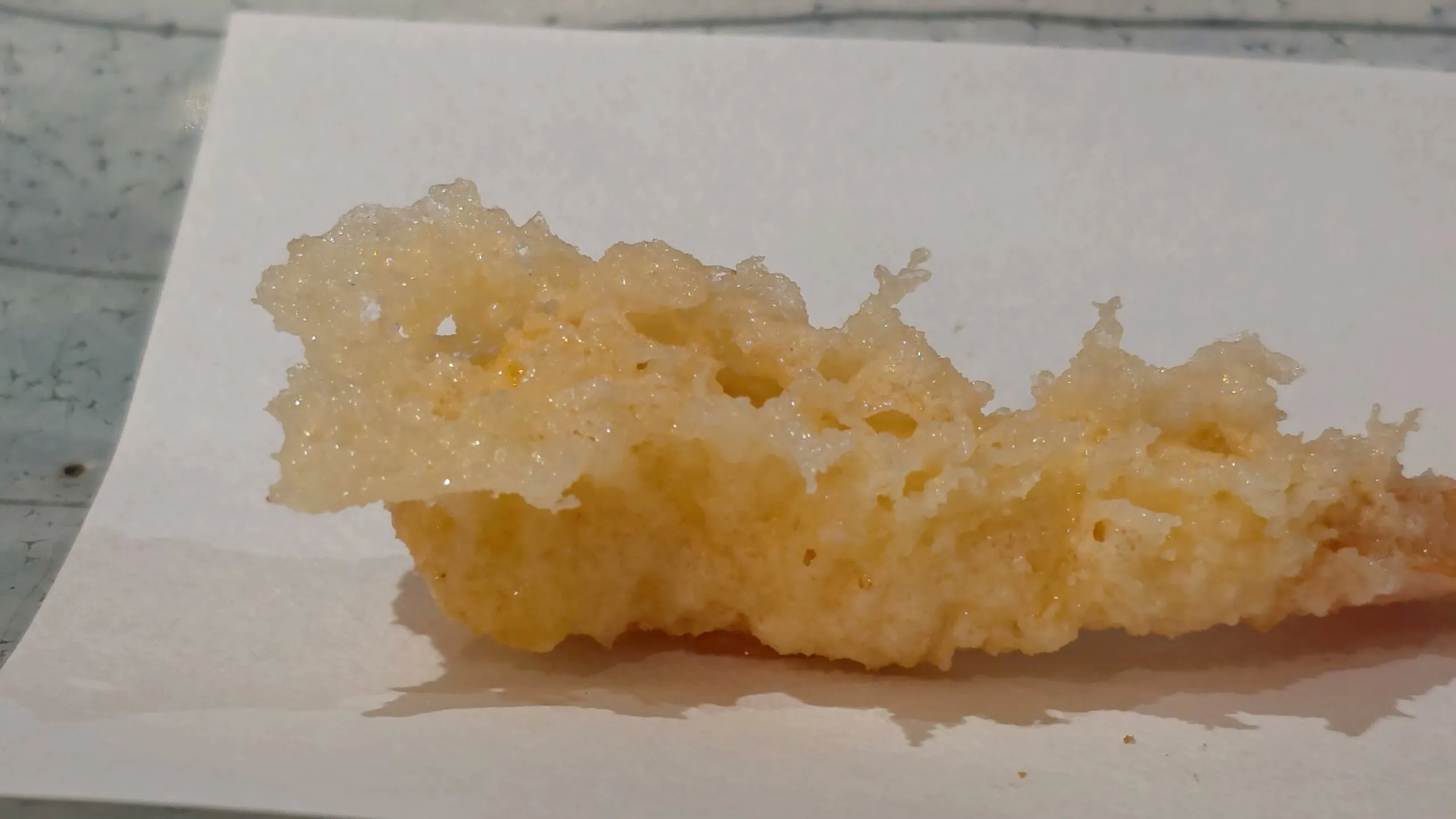
Look at those extra wisps of batter. That’s the kick. The coating on the prawn itself is thin, but he drops batter into the oil with chopsticks and swirls the tempura through it, the way you’d make tenkasu, so the crunchy bits stick. Lots of places do that. I’d never seen it come out this well. The crunch and the nutty taste it adds are incredible. This was the first place that made me see tempura as cooking.
Most tempura places give you two kuruma-ebi: together, one after the other, or one at the start and one at the end. Here they came back to back, the first with salt and the second with tentsuyu. The tentsuyu tastes lighter than it looks. Maybe that’s why the other guests kept refilling their grated daikon and piling it in, so more sauce clings.
I didn’t use that much daikon. Look at the coating, all those little craters, like your face. Dip it and lift it out and the holes hold plenty of sauce, so the light tentsuyu works fine.
TMI. The Michelin Guide’s write-up says Edo people ate thick-battered tempura soaked in sauce, so he went the opposite way from the thin coating he learned as an apprentice, and the thicker batter traps air. Where it touches the prawn it still felt thin to me. That air is what you see as craters. The restaurant’s site adds that the oil is one part toasted to nine parts untoasted sesame oil, and the batter gets remade about every 15 minutes, before the bubbles collapse.
Kisu, and no filler dishes
There’s a cute little figure of the chef on the counter. He looks younger in person. He told me his age and I forgot it again. Another young genius, I thought.
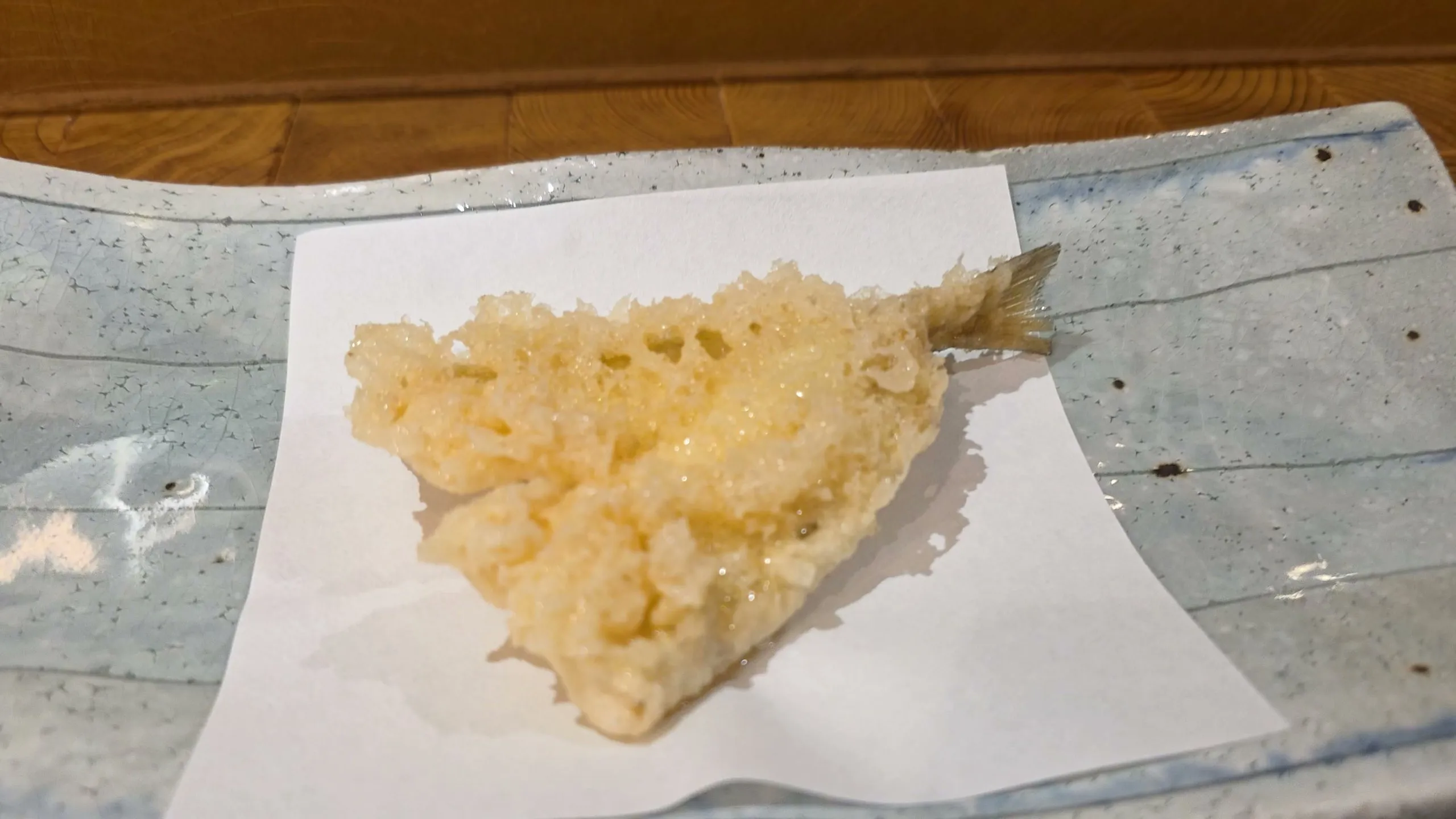
Next, kisu, Japanese whiting. A properly traditional course, I’d have said, if it hadn’t opened with shrimp toast. What I liked: no random side dishes padding out the course to hide that the tempura itself is dull. That’s exactly why I can’t stand some Korean beef omakase places. Here the tempura carries the whole thing.
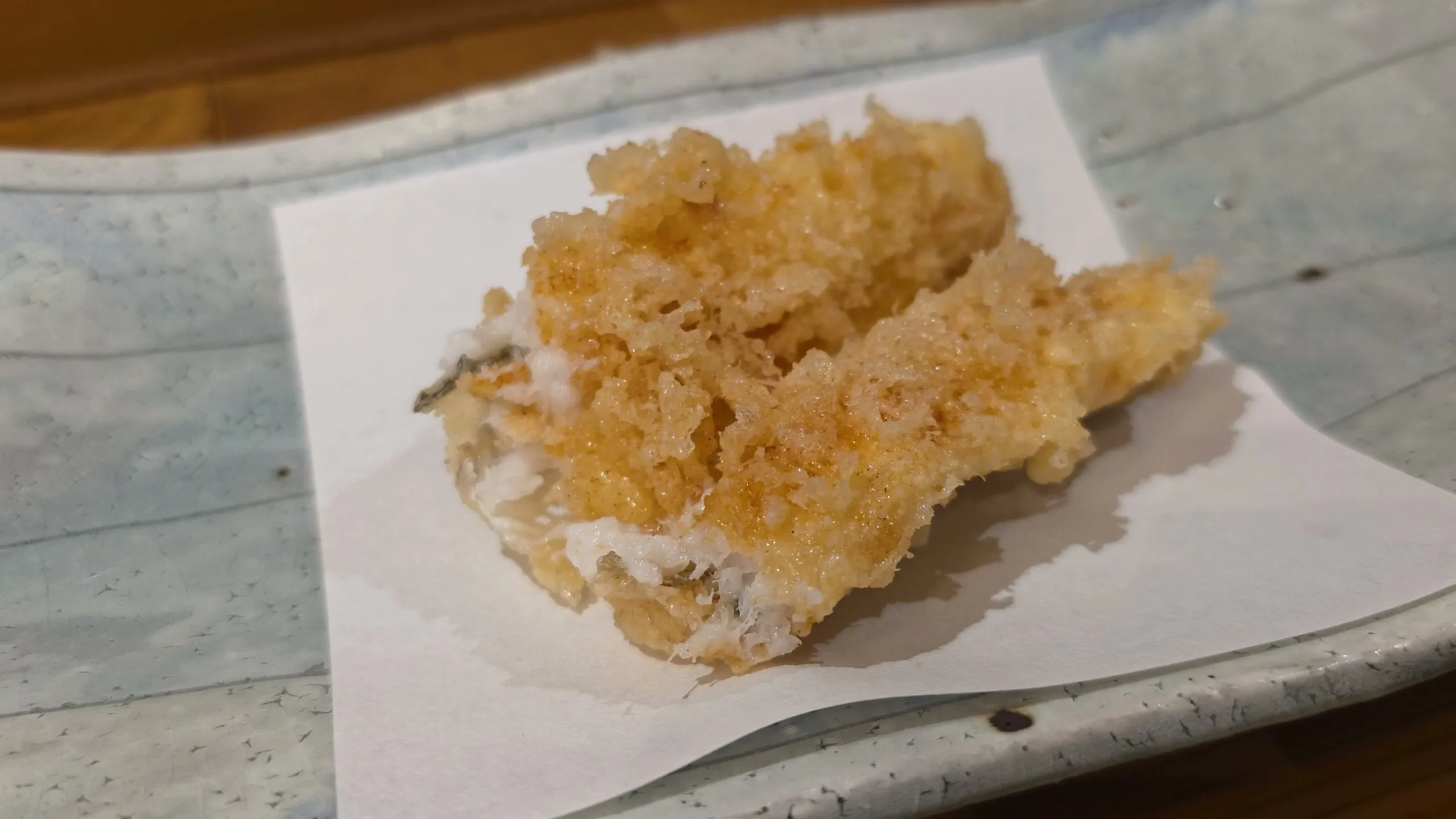
The flat fillet shows off the coating. Craters of every size, made for holding sauce. When a piece lands on your plate fresh from the oil, you can see the oil still sizzling in them. Watching that makes me hungry.
Good tempura locks in the ingredient’s moisture and heat, and the coating hugs it tight. At Asanuma the layer touching the fish is pretty thin and still properly crisp.
Eggplant, and the fried-shoe theory
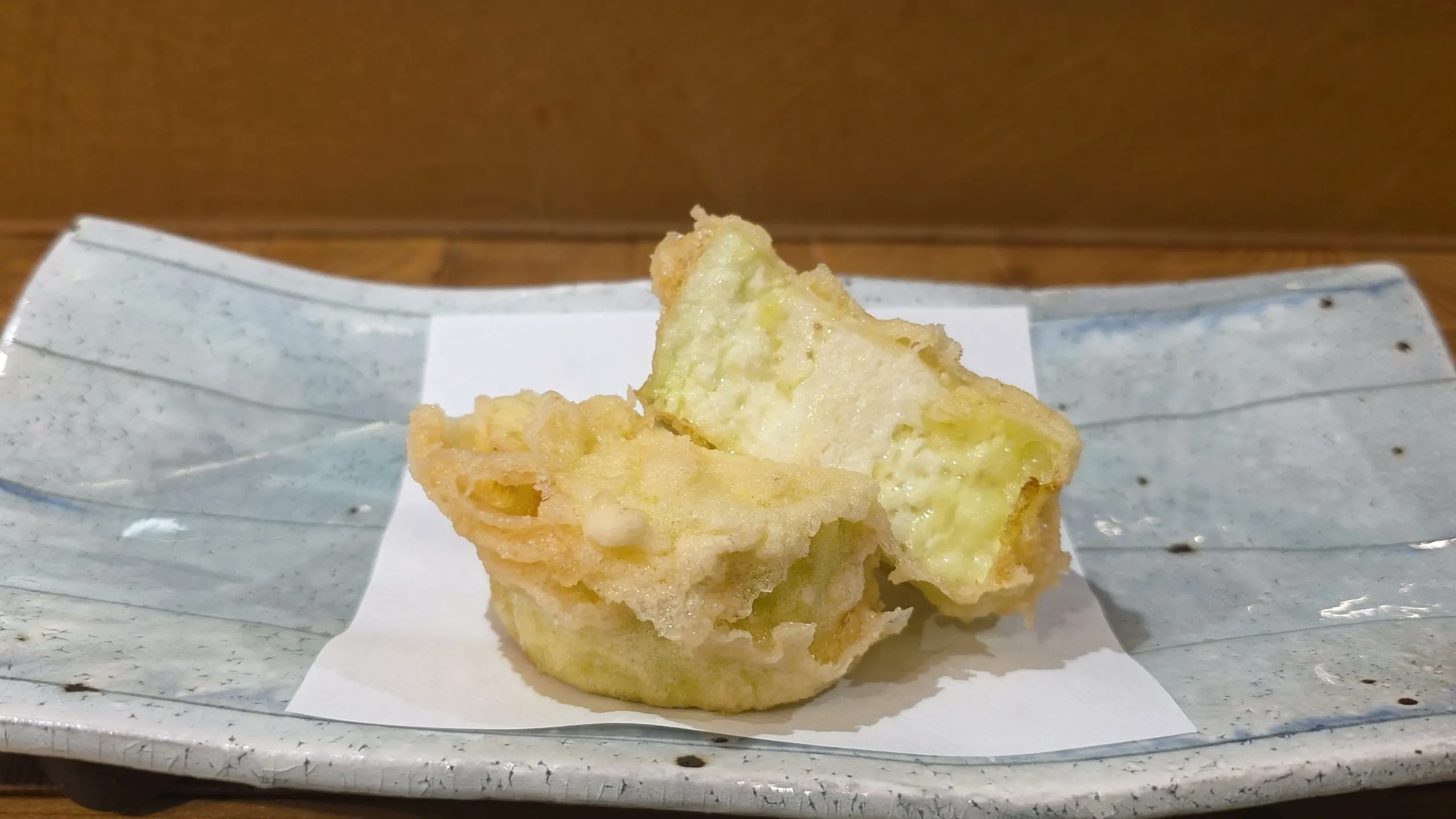
The eggplant from the opening display. People say even a fried shoe tastes good, as if frying improves everything. I can’t agree. Most ingredients have a method that suits them better, and if you ranked the options, frying would almost never come first.
I do make exceptions, like fried squid dipped in tteokbokki sauce. Most of mine are vegetables, though. Juicy, sweet enough, with a strong aroma of their own, so flavor and water burst out together when you bite. Sometimes it’s hot enough that your teeth might fall out. This one wasn’t as hot as it looked.
It tasted like the kaiseki dish where they char an eggplant, peel it and soak it in ichiban dashi, with all that sweetness. A finished dish, beyond well-cooked eggplant. Asanuma’s tempura is cooking. Every tempura I’d had before was a launchpad for some ingredient.
Shiitake with kuroshichimi
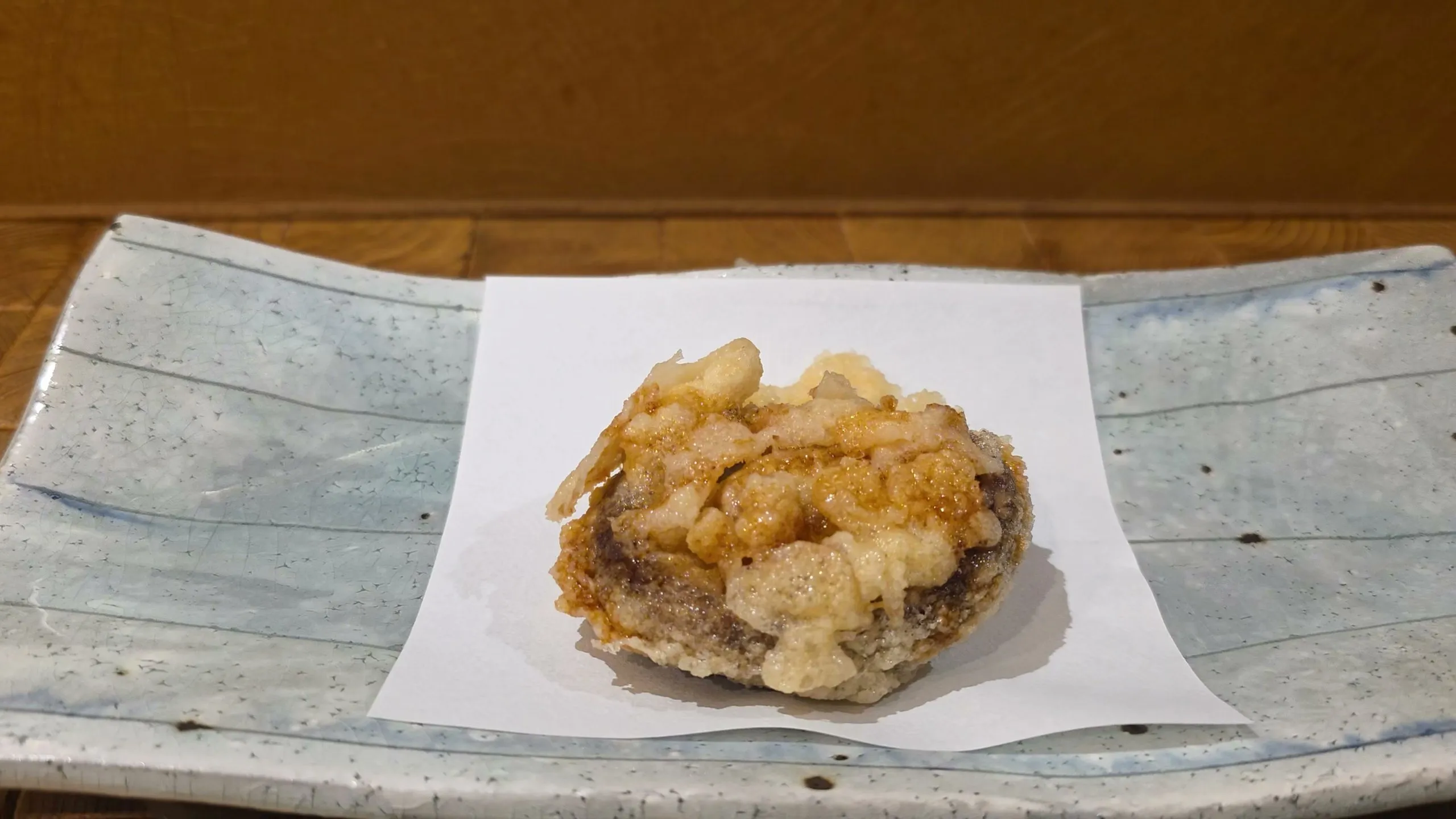
Shiitake, sauced and served to eat as it is. Even the shape of the coating looks built to hold sauce. One side was so thick it was almost hard, like old-school Korean cauldron fried chicken: crunchy, crunchy, then a rock that scrapes the roof of your mouth. This didn’t scrape. It was still way harder than anything I’d expect from Japanese tempura.
Then he said to try it with kuroshichimi, black shichimi full of sansho aroma. Wow, what a match. On the first bite I thought the sauce was good, the coating too hard, and the mushroom not doing much. Add the sansho and it turns into a different dish.
Hamaguri, and soy sauce magic
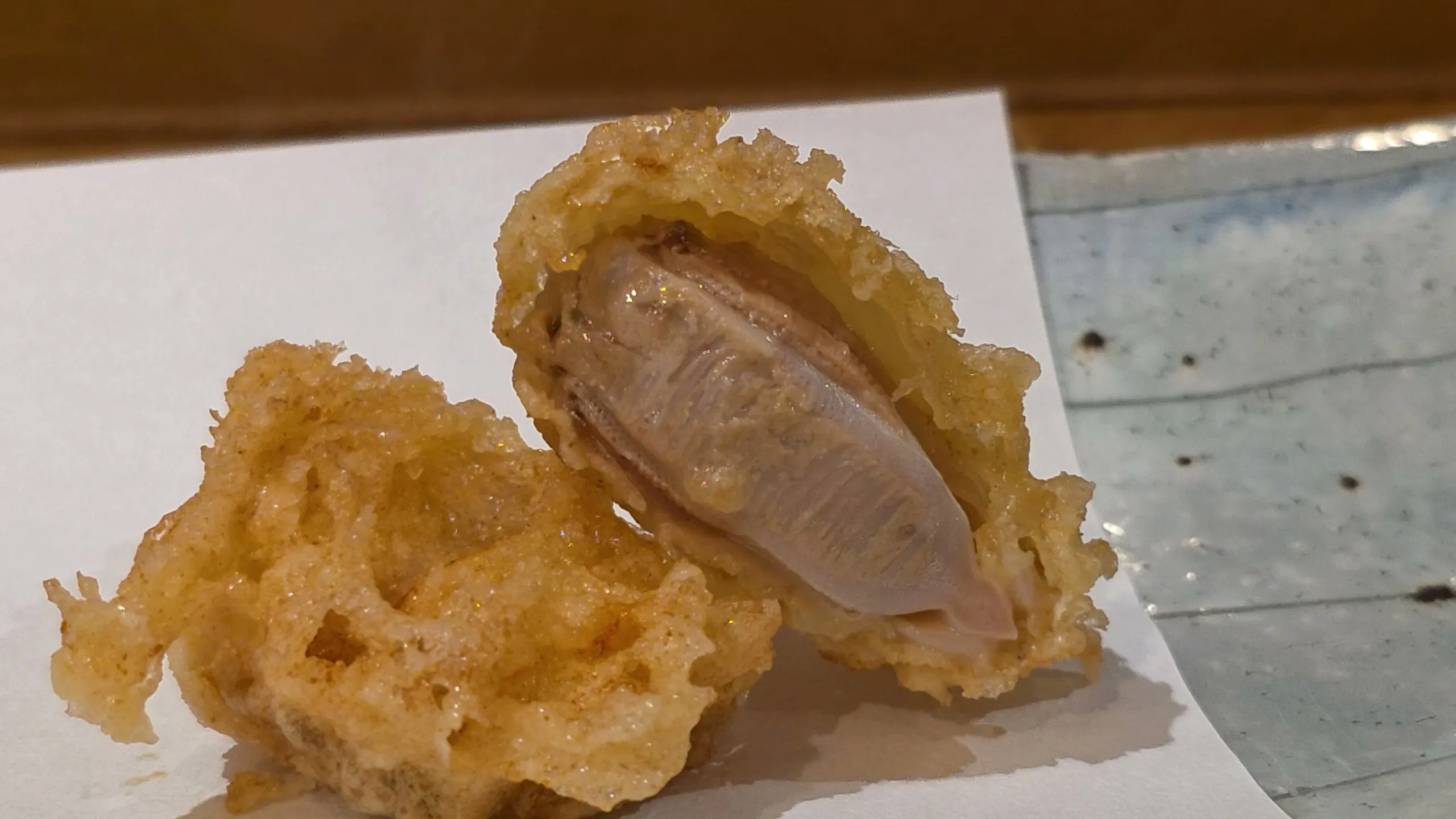
The big clam from the display. So plump you can see the juice in the cut surface. Looks insanely good. Maybe all that water is why the coating doesn’t hug it as tight.
It didn’t live up to the look, though. Very hot and a little chewy. Not overcooked, just chewier than I expected. You know sushi where the topping takes longer to swallow than the rice? About that much.
First piece with that kuroshichimi. The aroma is up there with the green Sichuan pepper powder I always brag about at Bongja Malatang. The clam still didn’t meet my expectations.
Second piece with soy sauce. Poured into the dish, it smells and tastes like plain soy sauce. I checked with my chopstick. Dip the tempura in, though, and the sweetness and umami jump up like tsume, the thick sweet glaze on sushi. Magic. It’s more than one flavor plus another.
Super-sweet corn
A palate cleanser of eggplant and cucumber came in between. A different eggplant, luckily.
Then another one from the display: chodang corn, super-sweet corn. It was still hot out when I went. It’s chilly now. Few ingredients shine all the way through in Japanese cooking like this one. Cold suri-nagashi soup, pot rice, even tempura, and each adds its own savoriness to that big sweetness.
Paul Bassett in Korea sold super-sweet corn ice cream for ages this year, and I ate plenty. Wonder if it’s still on.
Hairtail, then the worst bite
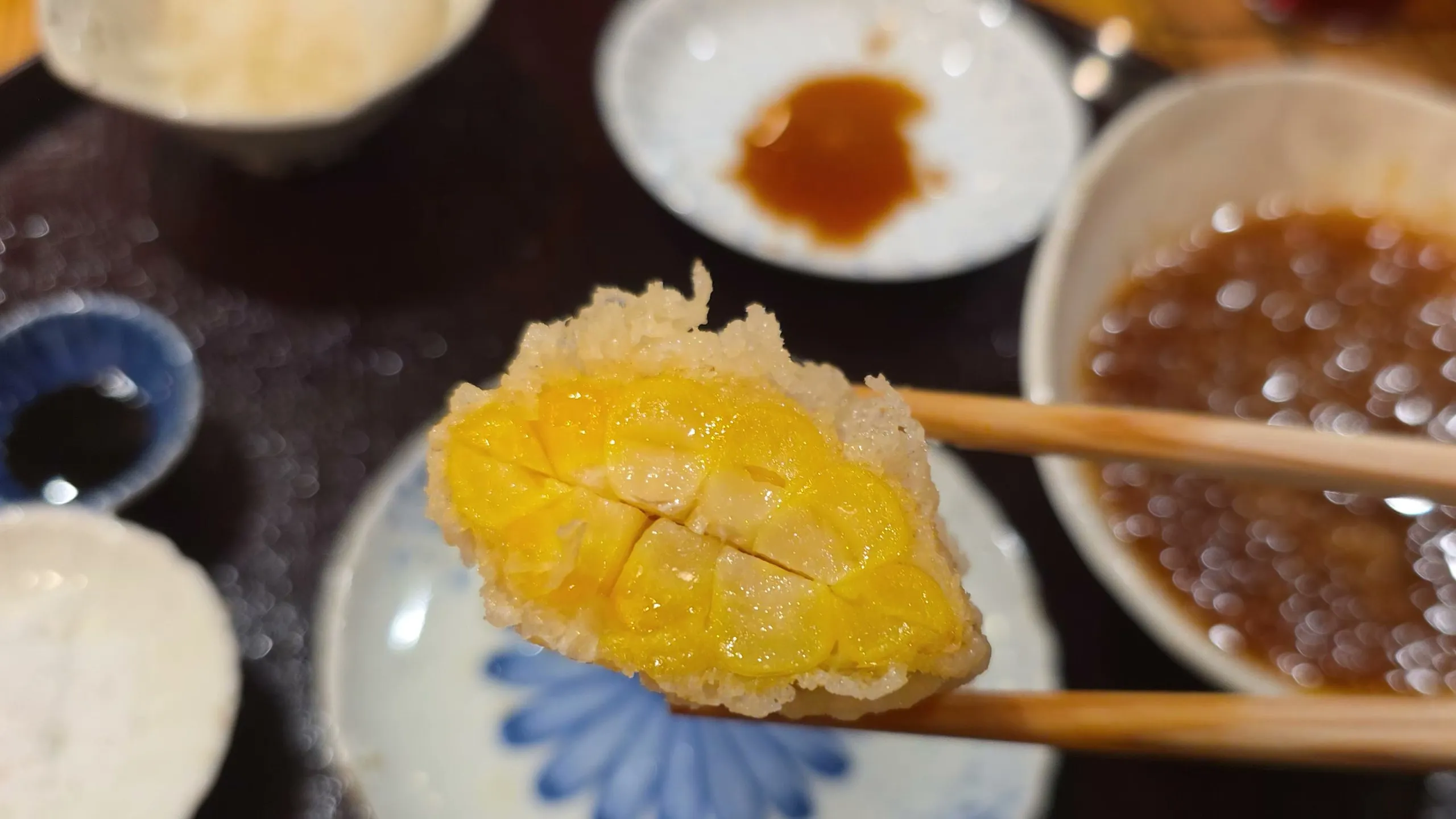
This is what I meant with the kisu: oil shimmering and sizzling inside the craters. Hairtail with shiso, to eat with tentsuyu and grated daikon, no separate dips this time.
Hairtail is good almost any way you cook it. Here I didn’t get the feeling that frying made it better, or that I couldn’t think of a better way to cook it. I’d never had that feeling at other tempura places. At Asanuma I’d had it with every piece until now, which was the strange part. With this one, my first thought was that Korean braised hairtail is better.
Then myoga, Japanese ginger, maybe the worst bite of the day. The flavor’s fine. The texture is the problem. Myoga is usually sliced fine as a garnish or torn into bite-size bits. Fried whole, it’s too big and too hot for one bite, and unless you tear it along the grain, the fibers are really tough. So I gnawed at it, juice dripping everywhere.
The bell pepper won
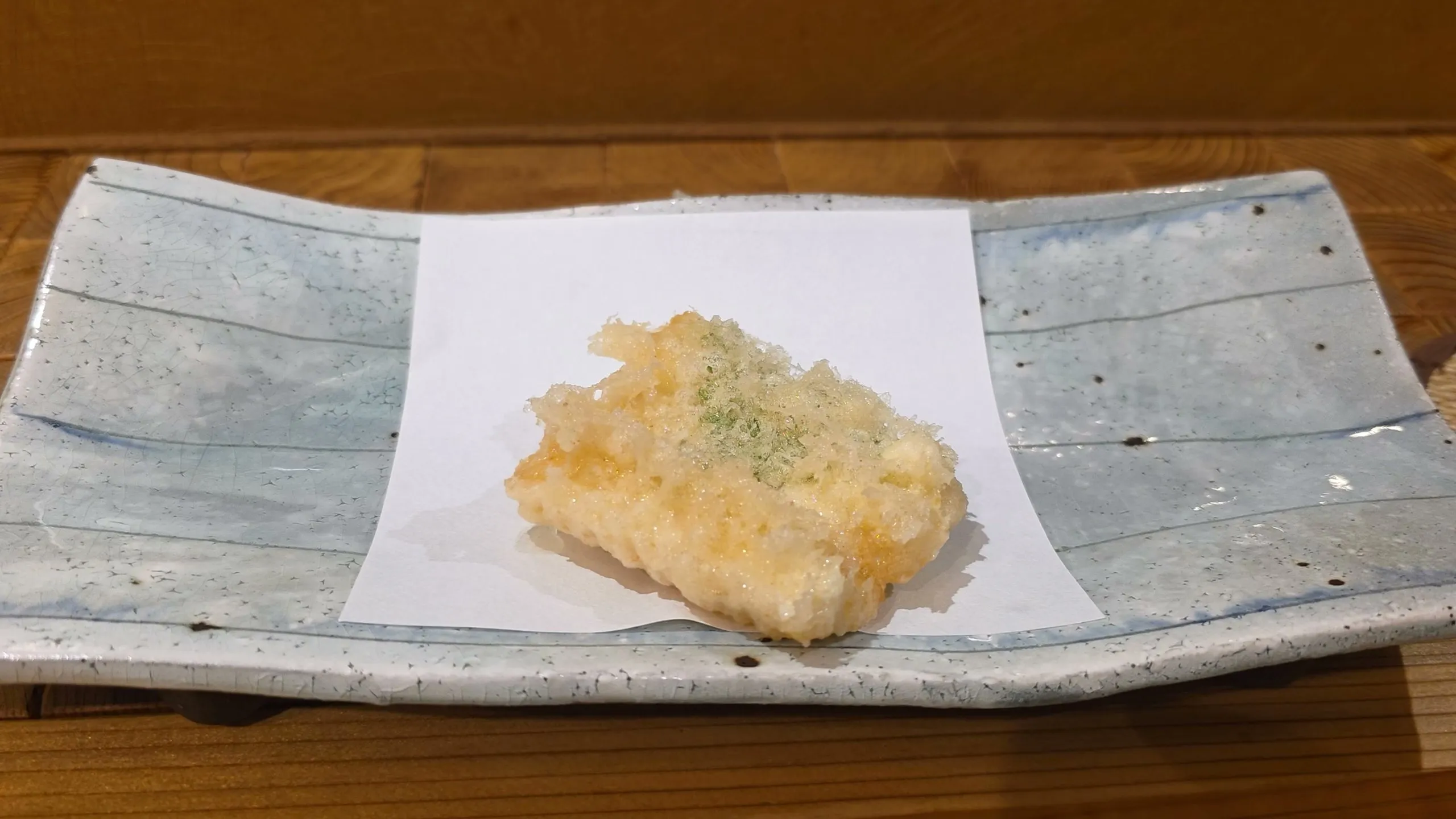
As the course wound down, he showed off seasonal extras: matsutake, just in season, and botan ebi. Forget those. This was insane. Bell pepper, my runaway winner of the day.
Bell peppers have a huge range. Sweetness, complex aromas, a bit of bitterness, umami, even something nutty. You taste that most in sauces. Every one of those was here, none missing, with an absurd sweetness on top.
Normally a pepper only gets this sweet if you char it until it’s collapsing, right before it becomes sauce. This one still had some bite. And when the juice burst, it wasn’t raw-pepper sweetness either. With the nutty, crunchy coating, it was like romesco sauce turned into a crispy solid.
Shin-ika, and the booking shock
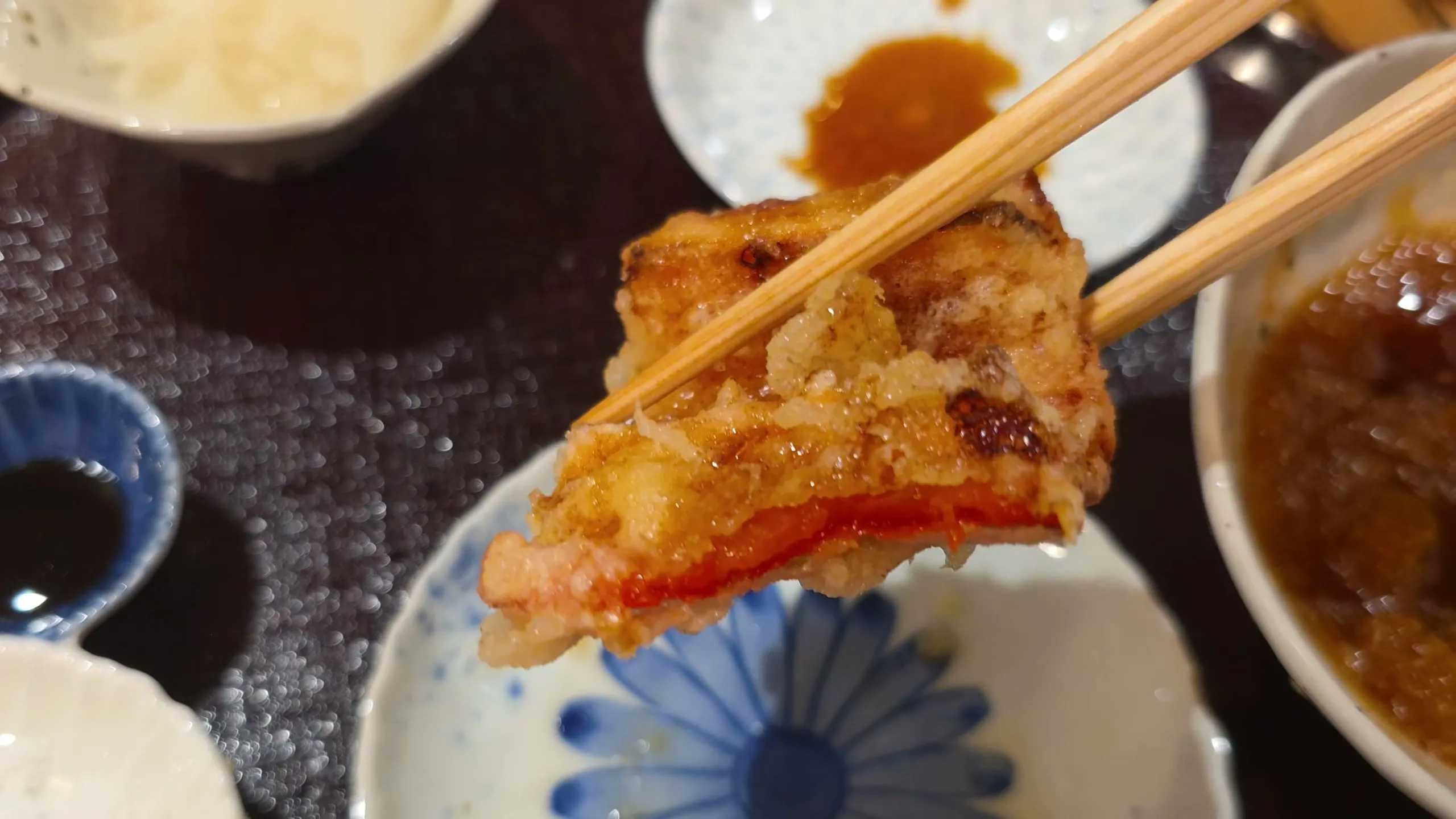
Now the extras. Shin-ika, new-season baby cuttlefish, is something I order almost every time I see it at a sushi counter. The season was nearly over, but they still had some, so I couldn’t resist. I don’t like fried food much, but fried squid is one of my exceptions. Not the kind you dip in tteokbokki sauce, obviously.
Sushi wins by a mile. Fried, you still get some of that soft texture, which is the ingredient’s strength. Sushi brings it out far better. I love shin-ika, but given the same chance, I wouldn’t add it again.
The shin-ika legs came next, along with a shock. I knew it was hard to book. Then I heard the next booking was August next year. I hadn’t even known the price. The regular course is ¥16,000 a person. That still exists these days? They’re raising prices next year, cancellations poured in, and a lot of seats opened up. Even so, the slot my friend got was August.
Botan ebi I didn’t need
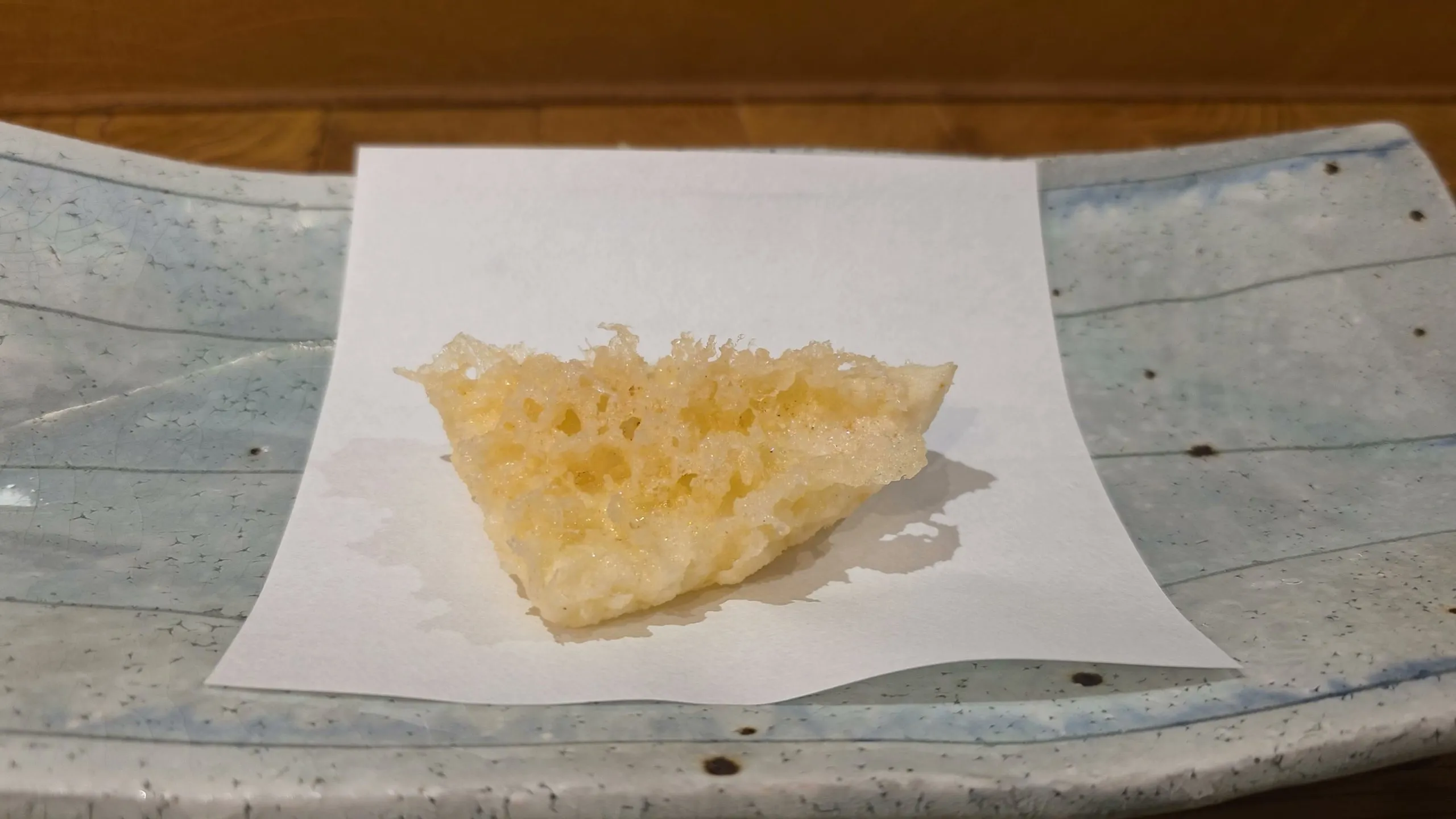
Another extra, botan ebi. They’re shrimp specialists, so I tried it. Honestly, no need. It’s not bad. The cooking is spot on, and the coating, like I said, goes great with soy sauce.
My problem is that I keep comparing it with the fried botan ebi Sushi In in Seoul often serves. That one is fried differently from regular tempura, with a cracker-like toasty taste, which is why I like it.
My expectations were low, and the course beat them so badly that I kept ordering extras. Then I regretted it, right after this botan ebi and again at the bill. The ¥16,000 course came to over ¥26,000.
Anago, the classic finish
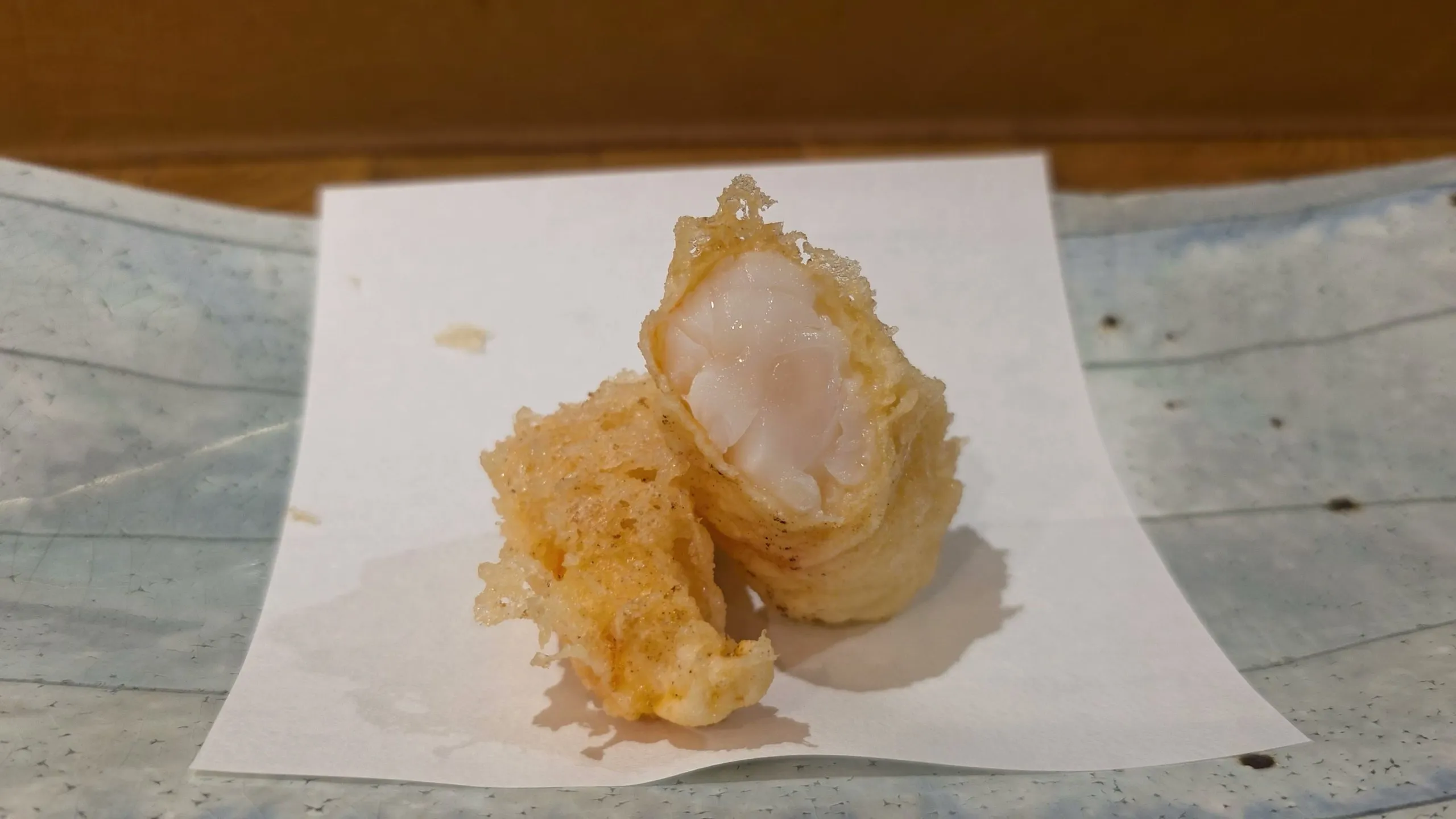
Anago, sea eel, the classic last piece at tempura and sushi counters alike. That sound when the chopsticks split it in half is almost a tempura-counter signature.
At sushi places I’m always sad when the last piece comes. I’d never felt that at a tempura place. To be fair, I haven’t been to many. This time I was sad, which is probably why I kept adding things. Not my best call. The anago was good too. Everything in the regular course was really good.
Tencha or tendon? Get tendon
Anago is the last piece, but there’s still a closing meal, like the rice at the end of a Japanese course. Here you choose tendon, a tempura rice bowl, or tencha.
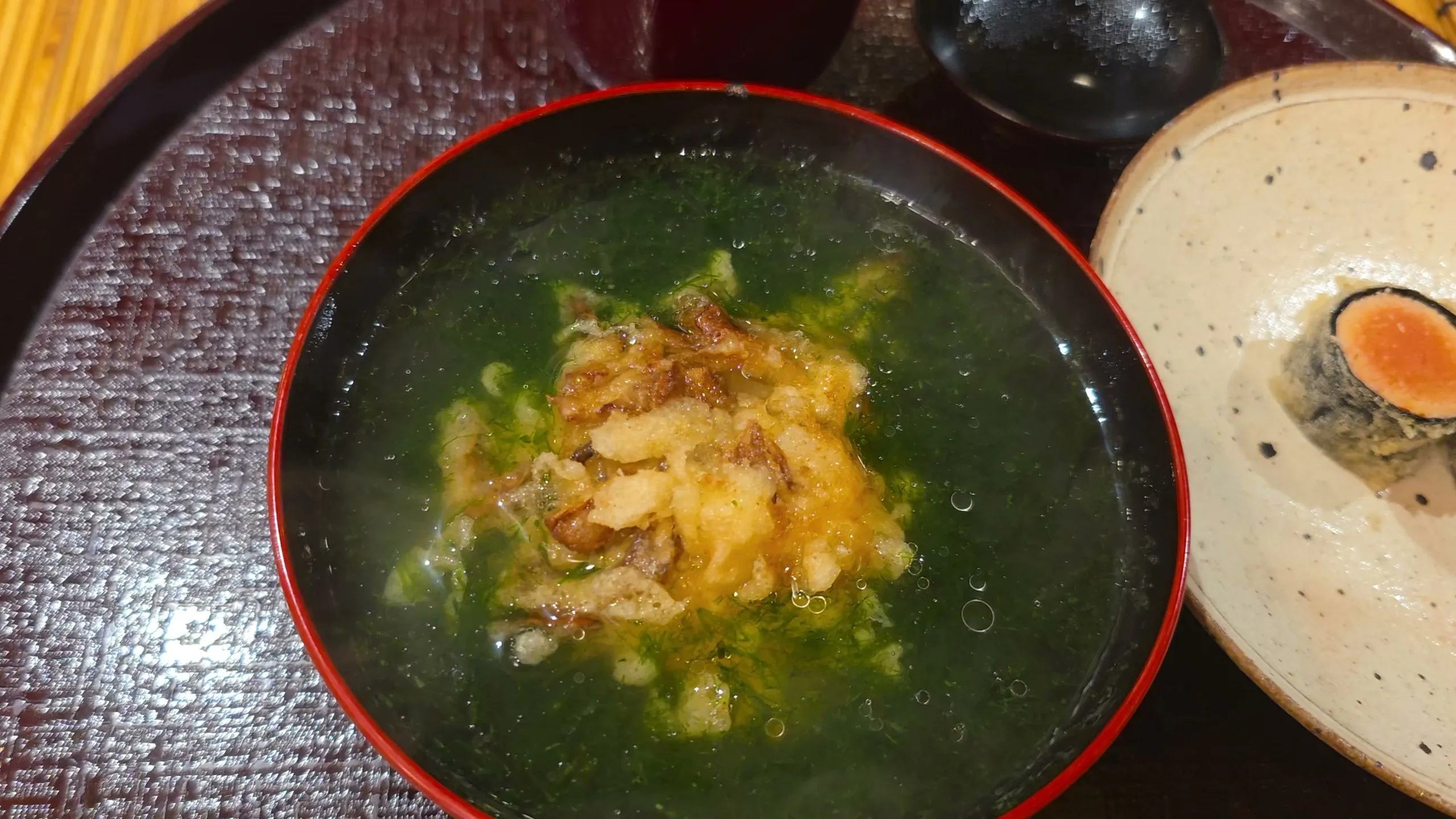
Then a little upsell: anything to go with it? I’m here, so sure. Fried mentaiko, spicy pollock roe. It tastes exactly like it looks. Fellow Koreans, skip it. On its own it’s ridiculously salty too.
Then the tencha. I expected something like ochazuke: a flavorful dashi, rice, and a kakiage fritter on top. This one had no rice, and the broth was full of aonori, green seaweed. Seeing everyone else’s tendon made me wish I’d ordered that. It looked so good. The seaweed didn’t ruin anything, though. It had its own appeal.
¥26,870 for one, with extras
2026/10 video
The regular course is ¥16,000 a person, as I heard it there. With my extras the receipt said ¥26,870.
The restaurant’s site lists the course at ¥16,500 with tax, and they’ve posted that prices change from 2027/01.
My friend’s next booking is another private one, and when he asked, I said invite me again. It’ll probably be ¥10,000 more by then. My extras added over ¥10,000 this time, so next time I’ll skip them. They didn’t add much.
Would I go back?
Yes. I went in not knowing the price, with low hopes, and left asking to be invited again. If you get a chance to go, take it.
Seriously recommended. The end.
How to book
How I booked
A Japanese friend books the whole counter privately and brought me along. While we were there, the next booking he could get was August the following year.
- Instagram DM
The restaurant’s site says seats are very hard to get right now. When a cancellation opens up, they post it in their Instagram Stories and take bookings for it only by DM. Those seats can be booked solo, and there’s no waiting list, so follow the account and be quick.
- TableCheck
Online seats open in rounds, months ahead. For three or more people, or a private booking for 4 to 6, contact the restaurant directly (03-4400-5977). Lunch starts at 12:00 and dinner at 18:00, everyone at once, so don’t be late. Closed Wednesdays. Cancel on the day and you may be charged in full.
Checked 2026/10. Booking rules change, so look at the official page before you go.
Where it is
- Address
- 6F ordin Nihonbashi Building, 2-10-11 Nihonbashi, Chuo-ku, Tokyo東京都中央区日本橋2-10-11 ordin日本橋ビル6F
- Nearest station
- Nihombashi, exit C6
Sources
- Tempura Asanuma official site Tempura Asanuma
- 2027年1月より価格改定いたします Tempura Asanuma
- Tempura Asanuma MICHELIN Guide
- ハトシ Wikipedia (Japanese)
- 天ぷら Wikipedia (Japanese)